
Will COVID-19 disrupt my child’s long-term education?
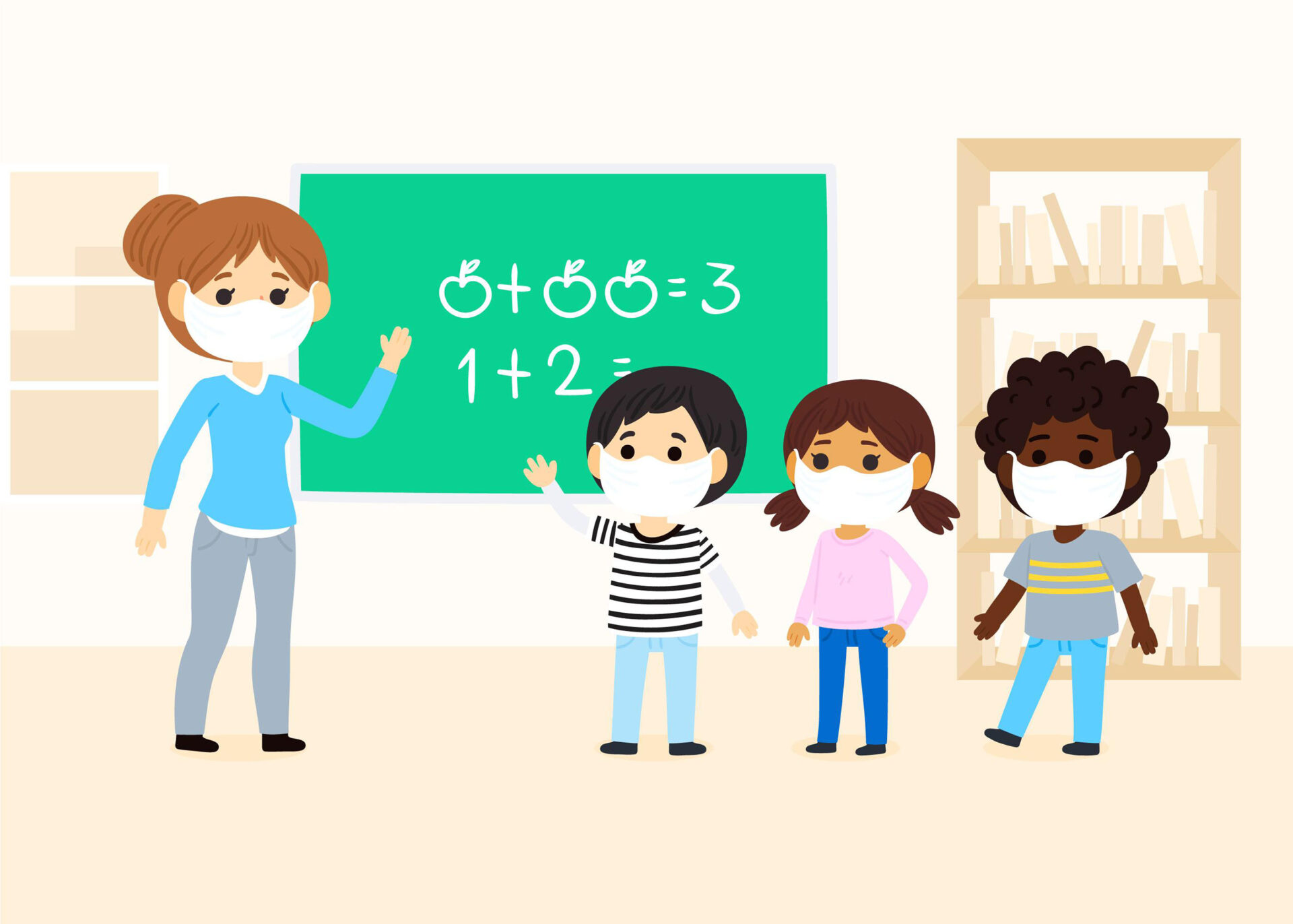
The COVID-19 pandemic has resulted in disruption to schooling worldwide, and indeed, here at Kidz Village, we have not been immune. Children, perhaps more than adults, have been adversely affected by the disruption, missing contact with their friends and peers, as well as the losing their regular education. We will, of course, do everything possible to try and ensure that the disruption has been kept to a minimum. As a highly respected kindergarten in Bangkok, we always put the needs of children and our own team first. Like all schools, we were concerned about the impact school closures would have but agreed that health and wellbeing was the primary concern and controlling the pandemic by whatever means was in the best interests of everyone. We have been, and will continually do so until this dreadful pandemic is over, on hand to provide support and help remotely wherever possible. Unprecedented steps  There has never been a need for school closures on the scale that we have experienced in the last twelve months in history. We are aware of the impact that this has had on students and their families. Alternative learning methods and socialising have been needed to maintain at least some degree of normality. No one could have imagined before COVID-19 that children worldwide would be taught online via virtual classrooms and restricted from meeting friends and even members of their own family. Emotional wellbeing One of the most notable concerns that parents have expressed has been regarding their child’s emotional wellbeing. Children of all ages have been separated from the friends, and their usual routines have been lost. In younger children, this can be confusing, but if they are engaging in other social interactions, it can generally be quickly forgotten about and have little long-term impact. However, one aspect that can be concerning for children in their formative years is there is an absence of play and a lack of opportunity to try things for themselves. While many parents are fortunate enough to be able to replicate this at home, it is definitely not true for all families. Although children will always catch up, it can impact their development, so every effort needs to be made to address it. The level and type of play will inevitably be different, but parents or other caregivers should find the opportunity to replace this where possible as it will help with learning, social skills and behaviour. Academic learning The stage of their schooling will primarily determine the impact of the COVID-19 pandemic on a child’s learning. Fortunately, for children who come to our kindergarten, we anticipate that the long-term impact will be minimal, assuming that the situation doesn’t continue indefinitely with future closures. Our biggest concerns, as outlined above, are the lack of play, opportunities to explore and social interaction and the impact that this has on a child’s development. Virtual classrooms and online contact certainly have their place, but it is no substitute for face-to-face contact where it is far easier for teachers to recognise when students are falling behind. We are doing everything we can to help parents provide homeschooling so that regular learning can continue as much as possible. In most cases, we have noticed negligible differences in our pupils’ academic development.   Homeschooling Homeschooling has been something that most parents are now familiar with and one that children probably enjoy more than parents! Very few parents have or indeed want to have the same skills as a professional teacher, putting everyone under strain. However, with our assistance in providing work at home, it is something that most parents have got to grips with. For most younger children, the opportunity to spend more time with their parents is they welcome. Where possible, parents should create an environment where their children can mix with others of their own age as this will lessen the detrimental impact of homeschooling. We have found that most pupils have responded well to being taught at home but are then pleased to return to school and see their friends. It is unlikely that the relatively short period of homeschooling will have any impact on their long-term education and future prospects. The current situation While most of the points we have addressed have been relating more to previous periods of lockdown, there is no escaping the fact that Thailand is now experiencing its largest number of daily cases since the outbreak began. At the time of writing, we have not been informed by the Ministry of Education that schools are required to close. However, we are aware that the situation is continually evolving, and we are monitoring it closely with contingency plans already in place. As with the previous lockdown, we will be working with parents and caregivers to ensure minimal disruption should we be required to close. We don’t envisage it being a long-term situation, and as such, we would like to reassure parents that we don’t believe that there will be any long-term impact on their child’s education. Long-term impact on children Children are superb at bouncing back from most challenges, so most experts believe that the long-term impact will be less than what some may fear. It is probably an exciting adventure for most younger children and something that they won’t think about in years to come. Of course, we always encourage parents to pay close attention to their child to look for any significant changes in behaviour. It could include their child becoming more withdrawn, having a short attention span or struggling with learning. If you have any concerns, you can contact the school as we have professionals on hand to assist you. Did you find our article interesting? We hope this article helped address any concerns you have had regarding the impact of COVID-19 on your child’s long-term education. We will always make ourselves available to help parents and answer any question that they may have. For more information, please call us on +66 2888 3337 or contact us directly via our

Choosing the right school for your child – things to consider when choosing a school

Selecting the right school for your child can be challenging at the best of times, but if you live in a new city or country, the task can be made doubly difficult. You may need the school to be close to where you work, near transportation links such as the BTS or MRT, or perhaps you have other restrictions such as needing some requiring additional support for your child. These are all significant factors to consider before you have even considered the budget and language! As the leading international kindergarten in Bangkok, we appreciate parents’ problems when selecting a school for their child. We always take the time to meet parents in person and discuss what they want for their child and hope to allay any fears on concerns that they may have. Hopefully, if you are currently searching for a school for your child, this guide will give you a few pointers regarding the things you need to consider when making your choice. Location Bangkok is a sprawling city, and while transport links such as the BTS, MTR and even the expressways are excellent, central Bangkok can be incredibly congested. From our experience, we have found that parents usually want their child to attend a school that is relatively close to where they live or work and can be easily accessed and the start and end of the school day. You may have a radius from your home in mind, or you might want a school close to one of the mass transit stations. Whatever your criteria are, you should draw up a list of all the matching schools. The elimination process Some lists can contain literally dozens of options depending on how broad or narrow your criterion was. Of course, some of these schools won’t be appropriate due to the language or curriculum, while others may not have the facilities you feel would suit your child. While we always try to avoid the topic of cost, some schools may be beyond your means financially while others may not be to the standard that you require. There are many reasons why you may feel that some schools aren’t appropriate, and often gut feeling plays a part. Ideally, it would help if you tried to draw up a shortlist of three to five schools. Do your research Once you have drawn up your shortlist, it is worth starting your due diligence with most information readily available online. You may be looking to find out factual information such as exam grades, teacher turnover, and cost, but it is subjective information that you are trying to find out more often than not. For instance, are pupils and teachers happy at the school, are the facilities of a good standard, what is their attitude toward discipline and what is the communication like between the school and parents? These are all things that most parents want to know before they select which school their child should attend. One way to find out more subjective information is by talking to other parent and generally listening to word of mouth. Parents are usually quite happy to discuss their feelings about the school, and while you can expect that some views will be polarised, if you speak to a handful of individuals, you should get an accurate picture of what school life will be like. Once you have started to build up this picture, you can probably begin to draw up a final shortlist. Arrange a visit We would always recommend that you visit all of the schools that you are considering. Some parents prefer to go alone while others will take their son or daughter with them. Of course, this is down to personal preference, but for older children, we would recommend that they come along as their feedback could be vital. When you are at the school, you should visit at least one of the classrooms to get an impression of what lessons will be like. How many children are in the class, are there any teaching assistants present and are the children participating and interested in the lesson? If all of these questions are answered favourably, it is a very positive sign. Observing a break time will also give you a good indication of what life will be like. How do the children get on and play together, is there a strong adult presence watching the children and are there any organised activities they can take part in? Again, if the children appear happy, this would suggest that the same will be the case for your child. Facilities and school activities For younger children, particularly those of kindergarten age, the facilities and school activities will be important. Much of your child’s learning at this young age will be through play, so are there things that would grab your child’s interest. What equipment is available in the play areas and do the children go on any trips may be things you wish to consider. Engaging with a child and making learning fun is crucial at a young age and can influence their future attitude toward school. Generally, schools with better facilities and arrange more activities both in and out of regular school time help pupils develop emotionally and academically – things that will stand them in good stead for the future. Of course, the people in the school are the most important factor, but facilities and activities come a very close second. Parental involvement and flexibility Most parents want to play an active role in their child’s schooling, and most learning establishments actively encourage this. However, if a school tends to resist parental involvement, it may be a cause for concern. There should also be a fair amount of flexibility, especially for younger pupils. You will probably get a “vibe” for the school’s attitude when you visit, but it is worth discussing with other parents to get their opinions. Did you find our article interesting? We hope this article gave you some ideas about what

10 ways to help your child develop communication skills

Communication skills are something that we all need throughout our lives, and as parents, helping our child develop these skills can be one of the most enjoyable experiences. Children learn by watching, absorbing and copying things that happen around them even from a very young age. It may be things that you say, something that you do or daily occurrences that they become familiar with. Even before a child can talk, they will communicate with you through their actions and as a parent, you quickly learn to understand them. As one of the top kindergartens in Bangkok, we appreciate the importance of excellent communication skills and encourage our pupils to communicate with their peers, teachers and others around them. We organise activities that involve communication and are designed to capture a student’s imagination and make learning fun. Of course, we appreciate that some children are more confident and outgoing than others and never make individuals feel pressured or uneasy communicating. If you would like to encourage your child to improve their communication skills, here are ten ideas that might help. 1. Talking about their day Often one of the easiest things to discuss with your child is what they have done at kindergarten or school. Inevitably, some children will be more forthcoming than others, but it is worth persevering with as you will find out more about your son or daughter’s friends and things they like or don’t like doing. These are other topics of conversation that you can have at another time and refer back to. If your child is particularly enthusiastic about something, you should try to keep them talking about it as long as possible, showing interest and asking questions. 2. Showing an interest in what they want to talk about One of the best ways to communicate with your child is to show an interest in something they are doing or want to talk about. Asking lots of questions is a great way to keep them talking but make sure that you listen to the answers. Children can pick up from an early age when someone isn’t listening, and just like adults, they find this frustrating and may result in them becoming more withdrawn. 3. Discussing what they have eaten Another non-intrusive topic of conversation is food. Most children have very clear ideas about the types of food that they like or don’t like. A good time to have this discussion would be around meal times as they will see the relevance, so they are perhaps more willing to talk. If they are preoccupied or distracted by something else such as watching TV or playing, this, like any other topic, could be quite challenging. 4. Classmates and teachers From a young age, children will start to develop opinions about their peers and teachers and are usually more than happy to share these opinions. It should be noted that kids do frequently fall out, so you shouldn’t become too concerned if they have fallen out with their “best” friend. Instead, listen to what they have to say and discuss things from the other person’s perspective. It can help them to develop emotionally, but it will also encourage prolonged communication. 5. Judging their emotions and feelings Talking about feelings can be quite difficult, and it can be even harder for children when they can’t communicate their emotions effectively. As a parent, you should recognise a noticeable change and try to talk about it with your child. It will probably involve asking lots of questions, but it can have endless benefits if they can engage with you. Care should be taken not to push some topics too much, and the timing of entering into these discussions is vital. 6. Reading stories together We often hear parents say that reading books to children is old fashioned, but we still believe that it plays a vital role in improving a child’s communication skills and developing their imagination. A skilled storyteller can bring a book to life, and your child can become encapsulated by the story. You must show enthusiasm when reading the story and avoid speaking in a monotone voice. Encourage your child to use their imagination and ask them their thoughts on key parts of the story. 7. Watch TV or play games together While reading is more beneficial, watching TV or playing games together certainly has its place. It is a way of bonding, and they will see that you share a common interest. Again, asking questions will be central to how successful this approach is, and if you are playing games, you should make sure you are enthusiastic but don’t get too competitive! 8. Visit the park Doing anything together is a fantastic way to build a bond with your child, which will always lead to naturally increased communication levels. One of the easiest things to do together is to visit the park as you will always see something new. Being outdoors is healthy for children, and the change of scenery will give you both something different to talk about, which will help extend their vocabulary – something that can be hard at home. 9. Scrapbook of their life Most children enjoy crafts, and creating a scrapbook of their life will help their communication skills whilst also giving something that they can look back on throughout their lives. The scrapbook can also be frequently referred back to, and you can discuss items or memories contained within it. It is an excellent tool to help with communication skills, especially among younger children. 10. Involve them in family discussions Although there are many topics that you wouldn’t discuss with children, there are equally as many which you can. Places to go or things to do can help them feel more involved and help boost their self-confidence and communication skills. It is something that works better with slightly older children but can be beneficial for all age groups. Did you find our article interesting? We hope this article gave you some

How does nature affect a child’s development? The benefits of playing and learning in a natural environment

It is at times such as these when we perhaps appreciate outdoor spaces more than ever. They are often something that we take for granted and don’t consider until some of the places we enjoy visiting are closed. The last 12 months are certainly seen our lives change dramatically, and occasionally we may forget how important it is for a child’s development to spend time outdoors. Usually, this is in the form of play, but it can cover a wide variety of aspects of everyday life. As a British international kindergarten in Bangkok, we have always acknowledged the importance of learning in a natural, outdoor environment. During our “normal” school day, outdoor play and activities are included as part of the daily routine with a balance of time spent learning inside and outside. The benefits of spending time playing and learning outdoors are well documented and proven to be beneficial for physical, emotional, social and intellectual development. Physical Development Benefits The physical development benefits of learning and playing outdoors are perhaps the most obvious and extensive of all the benefits, and this applies to children of all ages. It will impact a child’s weight, strength and coordination, and help improve the body’s immune system – something which is vital when it comes to fighting illnesses. Research has also shown that children who spend more time playing outdoors tend to be more physically active in adulthood, which has several health benefits. Some of the other physical benefits include: 1. Motor Skills Outdoor play and learning develop enhanced motor skills, including balance and coordination. By giving children the freedom to run around, climb and burn off excess energy, they will naturally become more confident and, as such, be willing to put their physical abilities to the test. In turn, this will further enhance their agility and strength, which, of course, has significant health benefits for them both now and in the future. 2. Lower Body Weight and BMI In western countries, around a third of all children are now considered obese, a frightening statistic we are sure you would agree, especially when in 1980, the figure was approximately 7%. The main reason for this is because children spend an increased amount of time indoors doing more sedentary activities such as playing video games or watching TV. Not surprisingly, a study revealed a direct correlation between BMI and the amount of physical activity which a child takes part in.  Obesity in children can have numerous health implications and these bad habits tend to continue throughout the child’s life leading to premature health issues. 3. Improved General Wellbeing As we have touched upon above, obesity increases the risk of serious health complications such as cardiovascular disease, diabetes and sleep apnea – all potentially life-threatening conditions. In addition, humans require vitamin D, which is mainly derived from exposure to sunlight and is known to strengthen the immune system and improve moods. Besides these perhaps more obvious benefits, with an increasing number of children who have ADHD, play and learning outdoors help sufferers burn off excess energy which can build-up if the sufferer is pent up indoors. 4. Improved Muscles Strength and Balance  In a child’s formative years, it is vital that they start to build muscles and muscle balance. It is particularly relevant in younger children who can build necessary core strength from something as simple as sitting in a swing. Older children can also improve muscle strength by riding bikes and skateboarding. Not only does this build core strength, but it also enhances muscle balance as a variety of muscle groups will be used. In turn, this improves coordination and balance.   Emotional Development Benefits Children who play outdoors more frequently are thought to be stronger emotionally and have better cognitive skills than children who spend more time inside. These children tend to be more adaptable and independent, which will stand them in good stead in school and when they finally enter the workplace. There are a couple of main reasons for this: 1. They Use All Five Sense Children who spend most of their time playing video games or watching TV will focus primarily on just two sense, vision and hearing. Children who play outdoors will also experience these senses and have an increased awareness of smell, touch and, quite often, taste such as when they taste the rain on their tongue. Younger children who are exposed to more sensory experiences are generally better equipped to grow and develop emotionally.   2. Increases Self-Confidence  Self-confidence is something which we all need from being a child until we are elderly. Children who play outdoors will develop a greater sense of independence, and with it, they will be able to build their confidence by trying new things. Freedom to try something without feeling like their parents are watching their every move will encourage them to take risks, although it should be stressed that the risk-taking should be within reason. Children who are prepared to challenge themselves by climbing monkey bars or seeing how high they can jump are normally more confident, independent, and more emotionally balanced. Social Development Benefits Outdoor learning and play are believed to have a massive influence on the social development of a child due to their increased interactions with other people. Experts believe there are several key benefits, such as: 1. Increased Openness In confined areas such as in a classroom or inside the home, children often find that they need to compete with siblings and classmates for attention. It can lead to noise levels increasing which younger children, in particular, may find intimidating. As such, they may become more withdrawn and quiet, which can prevent them from opening up about their feelings to parents, teachers and other caregivers. Many children find an outdoor environment less overwhelming, making them more willing to discuss their feelings and thoughts with others around them. 2. Heightened Self-Awareness In has been noted that kids who spend more time outdoors are far more aware of their surroundings, enhancing their observation

Successfully managing school closures, online learning and maintaining the school routine in times of closure

School closures in Thailand and around the world have brought significant disruption to many families’ lives with every household member affected. The current situation is unprecedented and, in reality, this time 12 months ago, none of us had contemplated the impact it would have. Knowing where to begin with online learning and homeschooling is one challenge, but this also needs to be balanced with a “normal” school routine and regular family life. As the leading international kindergarten in Bangkok, we appreciate how difficult the current situation is and are always on hand to offer whatever support we can. We have put together this brief guide to help parents, pupils, nannies, and other household members to manage this period successfully. Of course, the advice will need to be adjusted to suit you and your family, but it should give you a starting pointing if you are currently struggling to see the wood for the trees. Time Management In the modern world, excellent time management is important for all, but it essential when everyone is required to take on new and additional roles. Effective time management will not only mean that everything that needs to get done does indeed get done, but it will also help everyone keep their sanity! Remember, no one can do everything, and a lot of the pressure you may be experiencing will be the pressure that you have put on yourself. Most of us feel that we don’t have enough time to do everything, so the best place to start is by writing down everything you think needs to be done. Now you will see a few things that aren’t essential and don’t need to be done right here, right now and can be removed from the list. Anything that is not essential should be removed from this list. From the remaining jobs and tasks on the list, you can now formulate some form of schedule. At this stage, the list should look something like homeschooling, family time, and your job. Specific tasks are not required at this stage. Once you have an overall plan, you can then start to develop a strategy about how you are going to achieve everything that needs to be done. It would help if you appreciated that effective time management is essential for maintaining everyone’s mental and physical wellbeing. Having a plan from the start that can always be tweaked is the only way to manage online learning and maintain a regular school routine effectively. Being Organised and Having a Routine Sticking to a routine is the best way humans operate, and although at times it may seem tedious and mundane, trust us, in the long run, it will mean that you have more time to enjoy the things you like doing. It should include waking up at around the same time, eating at regular times and finishing at around the same. This will help the body clock and add structure to your day. From the list you created earlier, you will know what jobs need to be done, so now is the time to start delegating tasks to others to ensure that everything is completed. Now, we move onto the school routine and how you plan your lessons. As much of the learning will be done online, you will probably need to be flexible and work the school and teachers on this. For instance, if they offer a Zoom class at 10am on Tuesday, this is something that you must put in your schedule. Attending this class is vital, not only from an educational point of view but also to ensure that they remain in contact with their peers and their teachers. Sometimes, the impact on a child’s mental health can be overlooked as we struggle to cope with the rigours of daily life. Without question, a lot of the learning will be done at times that suit you and will be available online 24/7. Therefore, you will have some flexibility and be able to structure your learning around everyone’s daily life to ensure that all needs are met. Regular everyday life must continue where possible and not get forgotten. Maintaining all of your routines is crucial to ensuring that everyone’s needs are met, and their physical and mental wellbeing is protected.    Access to Online Content Although it may seem like an obvious fact, ensuring that your child has access to all the online content they require for their schooling is vital. Of course, this will mean having access to a computer, smartphone or tablet with internet access, but it also includes being able to access specific content. Frequently used conferencing apps such as Google Classroom and Google Meets require users to log in for lessons, so you need to ensure that your child’s login is working. There are also other considerations, such as how easily your child can find additional content for lessons. It may be in the form of links supplied by the teacher or alternatively, finding answers using search engines such as Google. Most students are relatively computer savvy so won’t find this too tricky, but it is worth checking from time to time that they have everything that they require. Unfortunately, it the modern world, we would also suggest checking your child’s browsing history to ensure that they are not accessing inappropriate content or receiving unsolicited messages. Family Time As we mentioned previously, keeping a “normal” life, where possible, is vital in ensuring everyone’s health and welfare. When you are scheduling activities, you still leave enough time for the family to get together as usual. This may include eating together, sitting down and relaxing together, or visiting places such as the park. Although you will almost inevitably be spending more time in each other’s company than usual, you should make sure that you still have “quality time” together. Of course, parents will also want some time together alone, so if possible, you should ask family or friends to look after your child for a few hours. It will help

How Can I Help My Kids Develop Better Social Skills?

Struggling in certain social environments is something that both adults and children can experience, and it can be traumatic for those concerned. As parents, it can be incredibly heart-wrenching, watching your child struggle to make new friends and feel isolated. In contrast, other children appear to be coping quite comfortably and therefore gaining more from situations. Learning to develop better social skills is something that as parents, guardians and teachers, we all have a role to play. As the leading kindergarten in Bangkok, at Kidz Village, we actively work with each child to help them to develop the skills which they will need in later life. However, it crucial that you also understand the role that you play in developing these essential skills that will help your children to adapt to different social settings. Although all children are unique and respond differently, some common themes will help them to develop into independent and confident individuals, something that will stand them in good stead for the rest of their lives. 1. Take an active interest in what they are doing Adapting to any situation is far easier when it is something that you genuinely enjoy, and this is definitely the case when it comes to social settings. Feeling comfortable will help your child to relax, which will help them to develop a range of skills naturally. As parents, you should actively take an interest in things that your child enjoys. It might be participating in their favourite sport, taking them to dance or music classes or perhaps taking them to see a movie. Showing rather than just telling them that you are interested will inevitably make your child feel more comfortable. Feeling comfortable and relaxed is arguably the first step in building social skills and will also help to put your child in an environment where other like-minded children surround them. If they feel that they have something in common, socialising will be far more comfortable. It would help if you tried to encourage your child to develop a diverse range of interests as this will help them to mix with others and become more broadminded. Mixing in different environments will also make them more confident in new settings. 2. Ask questions and wait for responses Long periods of silence can be uncomfortable for adults, but they are particularly intimidating for children who are likely to get nervous when the conversation lags. This nervousness can result in your child becoming more introverted, which will sadly make them more socially awkward and reluctant to engage in new settings. The Centre for Development and Learning believes that there are numerous ways in which you can engage with your child and either initiate and continue positive conversations. Asking questions is one of the best ways to initiate a conversation, but you must wait for an answer or reword your question. Your child should never feel under any pressure as this will again make them more nervous and potentially introverted. Your questions should be focused around what your child is talking about as this will help them to make a connection and thus, easier to give a suitable response. Your questions should be structured in such a way that means your child has to give far more than just yes or no answers.  3. Roleplay games Pretend play forms a crucial part of a child’s learning, especially in their early formative years. Roleplay games can be used with children of all ages, and it will help them to practice and therefore enhance their social skills. If you search online, you will find several role-playing ideas as well as practical tips. Finding games that match your child’s interests will inevitably help them to retain their concentration and reduce the chances of boredom setting in. One frequently used game is to encourage your child to take on the role of someone that they have trouble talking to or making friends with. This has multiple benefits; firstly, it gives you as a parent the opportunity to see how your child perceives this person and secondly, it may give you some indication of what that person is like. Once you understand this, you will be able to offer practical advice regarding handling the situation. Switching roles may also help your child to talk with that person effectively. A vital part of role play is to include body language, such as maintaining eye contact and smiling. Children often have trouble understanding the importance of body language, so it is your role to show and explain your body language. Once they understand specific actions and the responses they can trigger, they will appreciate their importance.  4. Empathy A child must appreciate how other people, both children and adults, feel. It will help them to form connections and develop positive bonds as well as helping them to understand the consequences of their actions. Parents and teachers can help to teach a child empathy by explaining different situations and scenarios that the child may experience. You should again ask questions such as how they would feel if another person acted in the same manner. Sometimes a child may experience guilt in these situations, so you mustn’t push the point too far. Another element of empathy is learning to listen to others actively. Children, through no fault of their own, can be selfish as they have been used to being the sole focus of your attention. Encouraging empathy will help to realise that sometimes they must put other’s feeling first, and this involves listening to what they say. Teach your child to focus on what others are saying and then consider what has been said when they have stopped talking. They should be encouraged to ask questions where appropriate, although they shouldn’t interrupt. 5. Understand your child’s limitations You must appreciate that all children are different and that some will be naturally more sociable than others. Outgoing children will find it easier to mix with others, but it is important not to push a child who

The Importance of Teaching Young Children Teamwork

We must recognise that teamwork is essential in every aspect of our lives. Humans can never function at optimum levels if they always operate independently from others. It is something that we learn from an early age, and as children start to mix and integrate with others, they will naturally begin to pick up some elements of teamwork. However, this will need to be reinforced by both teachers and parents. Teamwork is very much a social experience and involves working and mixing with others. Learning the importance of collaboration from a young age will give a child one of the essential life skills that they will take with them through the rest of their life. As one of the leading kindergartens in Bangkok, at Kidz Village, we believe that children should be taught to interact with others from a young age. Teamwork is one of the fundamental skills that we all require and helps to develop a range of other soft skills. For teamwork to be effective, it requires excellent communication skills as well as helping to create natural leaders. In young children, it will help them to appreciate different points of view along with helping to build trust and a realisation that you are working to achieve a common goal. Building teamwork at home Teamwork can be developed anywhere, but for young children, many of the initial concepts will start at home in small groups of friends and family. With those in their formative years, you can ask them to help you with simple menial tasks around the home. Children are often happy to help and will follow their parents lead, and this is an excellent foundation. As they get older, you can introduce some new ideas. Here are just a few of the things that you could consider: Invite your child’s friends around. You could create fun projects that they could do together. For instance, you do some cooking together or create a fun science experiment. These are ways that involve more than one person contributing and will teach them how to respect and listen to each other’s ideas and opinions. The projects and games can be adapted depending on your child’s and their peer’s ages. Play sports. Arguably one of the best ways to encourage teamwork is by playing a team sport. For those who have larger gardens, football can be played with a little as two people and will allow you to teach your child not only about teamwork but sportsmanship as well. It will help them appreciate success along with respecting their peers. For those without a garden, similar activities can be played in a local park or club. The importance of inclusion. A fundamental part of teamwork is ensuring that everyone is included. You should teach your child about the importance of ensuring that no one gets left out or excluded altogether. It is another opportunity to work on soft skills such as being accepting, understanding and having empathy for others. It would be best if you encouraged inclusion from an early age as it is something that they will need to accept throughout their life. Teamwork in later life There are many people they believe that teamwork is something that children learn naturally and indeed, not working together is something that they learn. While there are several schools of thought on this matter, the consensus is that it should be encouraged throughout their schooling. Indeed, after students have completed their education, teamwork will be required throughout their working lives and being able to demonstrate that you can work in a team is something that most employers seek. Although we will always embrace new technology, there can sometimes be a feeling that it encourages people to be individuals rather than to work in a team. As such, you must encourage your child to mix with others in a real environment rather than just through digital devices. Here are some of the things you should encourage them to do which are not only enjoyable but have educational benefits that are transferable into the workplace. 1. Take part in organised activities Even from a young age, kids can be enrolled in groups that organise extracurricular activities. Almost all of these groups will involve collaboration to some extent. This collaboration is a fantastic way to teach teamwork, and it is fun. It is particularly beneficial for children that come from single-child households where they won’t get the opportunity to mix with siblings. Of course, the organised activities should be age-appropriate, but you could consider cubs and scouts, a dance class, chess club and naturally, team sports. 2. Group bonding and socialisation from a young age Children of any age will enjoy playing games and participating in activities that are relevant to their age group. These games will encourage teamwork and will take place in a group environment, which will also promote bonding and socialisation. From a teacher’s or a parent’s perspective the objective is to ensure that the activities are fun and the educational element should be kept discreet as using phrases such as “organised teamwork activity” are likely to be met with resistance especially from older children. Some simple but effective games for those of kindergarten age could be follow the leader or scavenger hunt. 3. Encourage positive example on TV and digital devices Although we are somewhat loathed to include watching TV shows or similar on digital devices, we do recognise that this does form an integral part of modern life for most families. Children of all ages tend to have heroes and mentors on TV programs, so as a parent, you need to ensure that these are positive and appropriate. For younger children, you should encourage them to watch programs that teach character strengths. Simple searches on the internet will give you plenty of ideas which can be matched with your child’s interests. 4. Teach children the importance of encouraging others Teamwork is excellent for building empathy, as we discussed previously. Any games which they take

Why are male teachers important in early year’s education?

Early year’s education is one of the most critical points in a child’s learning and is a time when they will develop a range of skills which will be required throughout not only their school life but into adulthood. It is a vital time, and their early experiences at school will mould children. It is therefore disappointing how few male teachers there are in early year’s education. Estimates suggest that only around 2% of teachers globally are in this group are male. As one of the leading kindergartens in Bangkok, we recognise the importance of children being exposed to a variety of different experiences, and this includes different gender teachers. We actively encourage male teachers to apply for posts at our school and firmly believe that it helps students to receive a balanced education. Male representation and having positive male role models whom students can look up to is essential and helps to quash many of the unfounded stereotypes. Why don’t male teachers choose to go into primary education? Around 38% of teachers in secondary schools in the UK are male, and this is a trend which is more or less the same in developed countries. However, in the UK, where more teachers are in primary education, the figure is only around 15%. There is a general misconception and archaic view that females make better early years teachers because of their “maternal instinct”. However, there is little evidence to support the notion, and it merely presents another barrier that male teachers have to overcome. There is certainly a stigma attached to men working in early year’s education. Old-fashioned views that men in paid childcare are not “real” men still exist, especially in some parts of Asia and Africa. Childcare is still very much viewed as a “women’s role”, and this is something that needs to be overcome to break down much of the stigma. In some schools, women are perceived to be doing a “good job” and to introduce a male into the environment would “upset the applecart”. These are all unhelpful attitudes and barriers that need to be broken down. Sadly, the most serious and shameful attitude that is associated with men working in early years education is the association with paedophilia. While this is indeed shocking, there is nothing to suggest that male teachers have any association with this. Indeed, the assumption that all females are safe to be left with children is naïve. In reality, the correct checks need to be conducted on all teachers regardless of their gender. Pay scales It is sadly true and something which was highlighted by Farquhar, Cablk, Bucking, Butler & Ballantyne (2006) that primary school teachers are paid less than their counterparts in secondary school. With men still perceived in many cultures as being the primary breadwinner in a household, these low salaries may dissuade teachers from moving into this area and opting for secondary education for the obvious financial benefits. Training in early year’s international schools Many international schools, including kindergartens in Bangkok, have highly trained teachers, many of whom have trained in the UK, prior to coming to the Kingdom. While trends are changing, in the past, during their early training, few teachers will have been exposed to early years schooling and unless they had a passion for it and would have little to encourage them into this area. It is a shame, especially as many schools such as our own are actively seeking male teachers to address the imbalance. It means that there are perhaps more opportunities than male teachers realise and definitely less competition. Addressing the imbalance In schools around the world and spanning all age groups, male teachers are viewed as having a positive influence in classrooms. They are often role-models for many students where the male parent may not be present due to social or economic reasons. Male teachers, particular amongst younger students, can almost become a father-like figure and a person who can be trusted. Research was conducted in New Zealand (Farquhar et al. 2012) which showed that having a male role model was essential for young male students as they learnt about “being a man” and the social responsibilities associated with this. Likewise, young girls needed to learn how to relate to males, with many reportedly shy in male company at the beginning. The study suggested that why a lack of male influence impacted on both males and females, it was younger males who were most adversely affected. Farquhar et al.’s (2012) theory was supported by McNaughton and Newman (2001). They again found that male teachers had a pivotal role to play when it came to introducing boys to the theory of masculinity. In a politically correct world, this is something that can be sidestepped and ignored, but it is something that can be missing from homes and has a detrimental effect on the rest of the family. Male teachers do interact with students differently, and this is something which should be encouraged and not vilified. Breaking down stereotypes As we touched upon above, male teachers have a different approach to teaching, and this includes elements of play. In families without a positive male influence, it is easy for stereotypes to exist – ones which are usually inaccurate and outdated. To breakdown these harmful stereotypes, we need students to see what male teachers do first hand, appreciating and accepting the role that they play. Stereotypes can be detrimental in adult life, so dismissing them early is crucial. Academic Experience In any educational establishment, there always needs to be a gender balance, and this should be something that begins in early year’s schooling and in a child’s main formative years. It is widely accepted that boys and girls learn differently, something which is more apparent in these formative years. Boys tend to be a little more dominant and boisterous something that often, male teachers encourage or at the very least, accept. However, female teachers often try to stop the behaviour and encourage “nice” play. Peeters (2007) suggested that in most

10 ways to teach kindness to children

There is no doubt that every parent wants the best for their child and this incorporates helping them to grow up to be well-rounded individuals, which includes fostering an inherent culture of kindness. From an early age, children tend to be naturally kind to one another. However, unfortunately, as humans, it is a character trait which can quickly be lost due to the environment which we grow up in. Children need to be kind to their peers, to teachers and all around them, and sometimes this is something that as a society, we need to cultivate. As a leading kindergarten in Bangkok, we intentionally create a culture which helps to nurture kindness. We believe that this encourages empathy and understanding, something which will help them to form stronger and deeper relationships. As these relationships build, it naturally creates trust between individuals, and this will help pupils to feel genuinely valued, which, in turn, forges a healthy culture for learning. These are all skills that will be invaluable not only throughout their school life but also at university and in adulthood. Here are ten techniques which we suggest for helping to teach kindness in children of all ages. 1. Be a good role model From the day that a child is born and in their early formative years, much of a child’s learning will be done from watching and copying others. It is, therefore, vital that as parents, carers and educators, we set a good example and that we are kind to others. For example, in schools, we have different people supporting the children throughout the day such as teachers, teaching assistants, or nannies, and we make a point of thanking them for everything that they do in front of the pupils. As children replicate what we do, they soon start doing the same, initially thanking staff and developing into a pattern that then continues with their peers and others who are part of their day. As parents, we should be kind to others at home and respectful to others when you go out. Of course, this is something that you will do naturally, but it is something that initially, you should exaggerate so that your child notices and follows your lead. All children look to role models, so it is crucial that as teachers and parents, we set a good example. 2. Empathy with intentionality Learning to see things from another person’s perspective is a skill that we should all learn to master, but unfortunately, it is something that can be easier said than done. Some of you may be familiar with “The 7 Habits of Happy Kids”, and one of the habits is learning to be kind to others. It is particularly relevant when it comes to dealing with conflict and relates to the popular Franklin Covey expression “Seek First to Understand, Then to Be Understood” you can do this and see things from another person’s perspective, even if you don’t necessarily agree, it will help you have empathy with their feelings. 3. Kindness Week Kindness Week, which is celebrated in February, can give you ideas about what activities you could include to promote kindness. Although integrating kindness teaching and actions is something we endeavour to include in the daily routine, some of the ideas behind Kindness Week are beneficial. We would prefer to include activities such as helping a friend tidy up, helping a peer to fasten their shoes or generally do something nice for another person may be beneficial in some circumstances, rather than offering gifts or presents. These Random Acts of Kindness (RAKs) are popular with children, and it can be a fun exercise with all the teachers joining in. While it is fun, it does carry a serious message in that we should always be kind to each other, and when we are, we are all happier and relaxed. 4. Encourage discussions Even in younger children, you can arrange meetings where students talk about something that has happened to them, for example, over the weekend. The story may be fun or sad, but the other students are encouraged to listen and ask questions. Teachers can also become involved if none of the students has a story to tell. It helps to form bonds, but it also helps to encourage understanding and empathy of their peers. If you have pupils in your class from different countries, cultures or backgrounds, you can encourage them to tell others about their experiences. It will help to breed greater tolerance which is excellent for building trust, breaking down barriers and with it, relationships. It will allow students to appreciate others and accept differences along with deepening their learning experience. Over time, this will hopefully help to build a stronger community and a better society for us all. 5. Focus on building friendships We want our children to be kind to everyone, and creating an environment where students can quickly form friendships will help to facilitate this. A common saying in classrooms, especially with younger students is “We are all friends”. An exercise could be to look at what friends do for one another and what friends like to do together. Encourage the children to speak, and you will have some fantastic insights into how children feel and think! Friendship is all about listening to others so this needs to be stressed throughout the exercise to stop it from descending into chaos. 6. Have a Kindness Centre As friendship is such an integral part of kindness, one possibility that you could explore is to develop a “Kindness Centre” where children are encouraged to form friendships, perhaps in pairs. One student talks or reads from a book about something do with friendships and how friends help each other. After a certain time, ten minutes, for example, the class sits down and discusses what they have learned. As a teacher, we encourage students to focus on positive sentiments. Areas which you could then discuss as a group are: Friends encouraging each other Friends showing respect

Why is it important to introduce your children to a broad spectrum of experiences?

All children should be introduced to a broad range of experiences from an early age for them to develop physically, mentally and emotionally. Children start to experience new things from the moment they are born, with sensory activities playing a significant part in the first few minutes and hours of their life. For the first few months and years of their life, sensory information and the environment around them will play a significant role in their development. We all appreciate that genetics is a massive contributor to how we evolve as individuals, but at Bangkok’s leading international kindergarten, we believe that experiences are equally as important. In this article, we will focus on how being exposed to a broad spectrum of experiences can influence a child’s development as well as their personality and behaviour. While the “wiring” of the brain may be genetics, how it develops comes from experience and learning. What the psychologists think Psychology theories are incredibly useful when it comes to understanding the role different experiences have on our lives. They help us appreciate how they shape us both as children and adults. There is a consensus that as humans, we learn through three different types of conditioning which are explained below. Classic conditioning – Classic conditioning is how we learn to respond to a particular stimulus with Pavlov’s dogs often being cited as an example. Children quickly, often through repetition, associate a specific action with a response. Just as Pavlov’s dogs associated a bell with food, a baby will know that when they see a bottle, they are about to be fed. It is learning from experience and is essential in terms of their mental development. Operant conditioning – Operant conditioning is the act of rewarding good behaviour and punishing bad. It is often referred to reinforcement learning as could include a child being taken to their favourite restaurant for helping with household chores. It is about encouraging good practices and the avoidance of bad ones. Observational learning – Observational learning is where kids learn from watching the actions of their parents and then replicating them. In the modern world, this now includes steps that they learn from video games and the internet, which is one of the main reasons parents need to be increasingly vigilant about what their child is doing. Modelling good and positive behaviour is what should always be encouraged, so parents need to be aware of their actions and behaviour. The importance of good and bad experiences As parents, we always want to shield our children from bad experiences, but in the real world, this isn’t possible. Dealing with negative experiences and learning coping mechanisms or appropriate actions is essential if they are to become well-balanced adults. Arguably, overly protective parents can have a damaging effect on a child in later life as they may be missing essential life skills. It perfectly illustrates why it is vital to experience a variety of adventures, events and even ordeals. Where do children gain this broad spectrum of experiences? In reality, even as adults, we are exposed to new things everyday so most children will gain this exposure naturally. Children will learn from family, teachers and their peers with many of these practices and skills being required as they grow up. Of course, many actions become mundane, so parents and teachers must make a conscious effort to expose children to different things. It shouldn’t be ignored that where and how and child is brought up will influence their personality. It can be affected by the country, eastern and western cultures as well as religion and personal beliefs. However, it is equally essential that it is the interaction with these influences that will ultimately dictate how our children develop. Often events will combine uniquely for each person, and this will shape the person they become. Ideas to help broaden experiences 1. Further education Education is an incredibly broad topic and extends far beyond academic learning. For instance, you could teach your child how to do things that interest you such your hobbies. If you enjoy cooking, yoga or even DIY, you could show your child how they can join in. Naturally, the level and detail to which you show them will be dependent on their age while also needing to be an appropriate skill for a youngster to learn!  2. Cultural activities and events Culture is again a very wide-ranging topic but includes modern culture such as music and dance or something more historical. Visiting museums, theatres, or even sites of interest will expose them to new and positive things. It will help to broaden their horizons and interests, as well as impacting on their personality. 3. Activities Participating in activities is another great way to expose children to new experiences. It could be joining a group, playing a sport or visiting a zoo. When it comes to activities, your choices are endless and are only restricted by your imagination. Ideally, you want to find something that you are both interested, and this will help to develop the parent-child bond. The influence of parents and caregivers Finally, parents and caregivers will have an enormous impact on a child’s early years. Some children are fortunate to receive lots of love, attention and care. Sadly, some parents don’t have the time that they would like to spend with their children, perhaps worried about work or other issues which a child shouldn’t be exposed to. While this isn’t necessarily the parent’s fault, they should try and find ways to enrich their child’s life. It could be that others help them accomplish some of the ideas mentioned above.  Did you find our article interesting? At Kidz Village, we care deeply about encouraging children to experience new things and broaden their spectrum of experiences. Our acclaimed International School in Bangkok strives to provide the ideal environment to promote all aspects of learning, including broadening horizons. For more information, please call us on +66 2888 3337.