Beyond the Walls: Why Nature Is the Ultimate Classroom

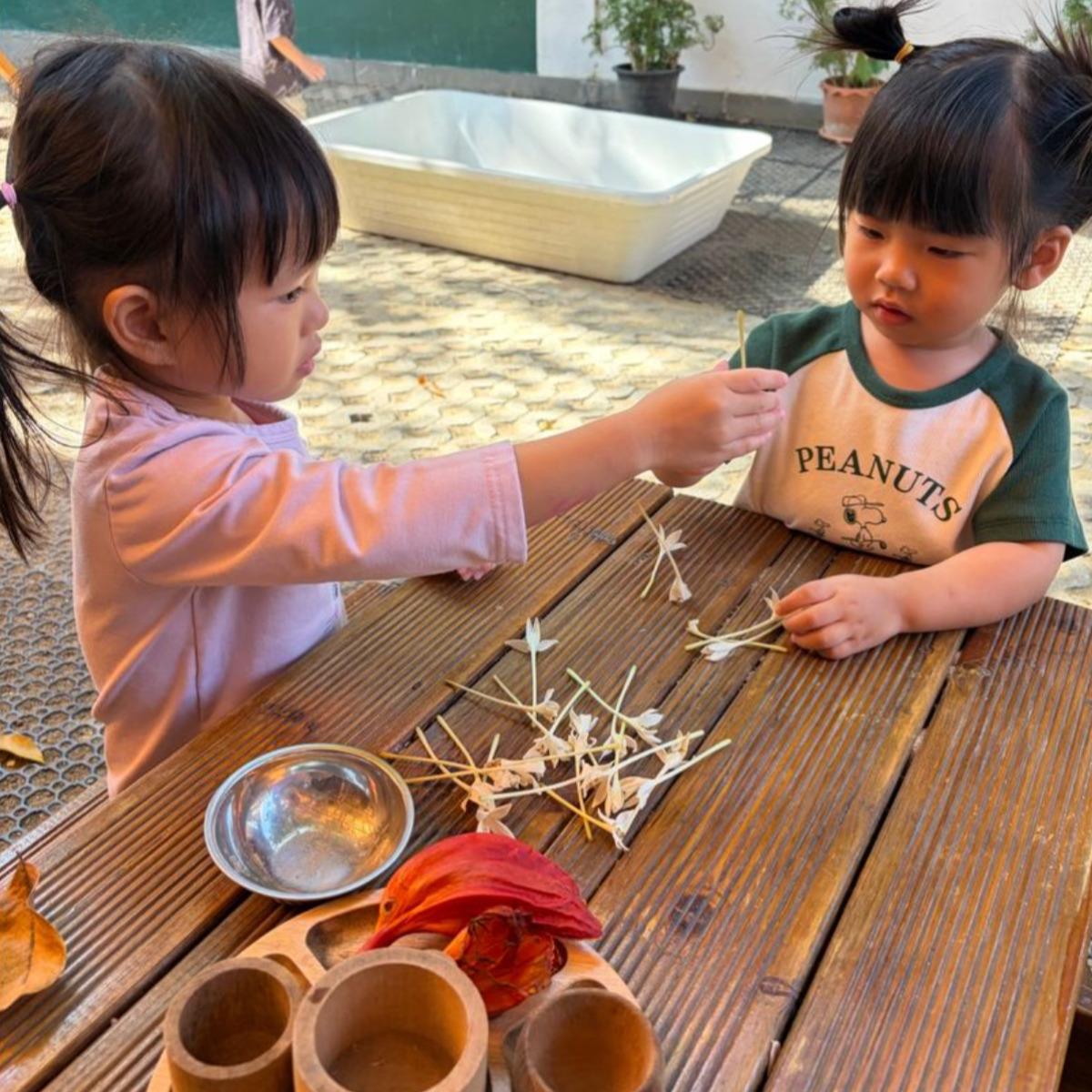
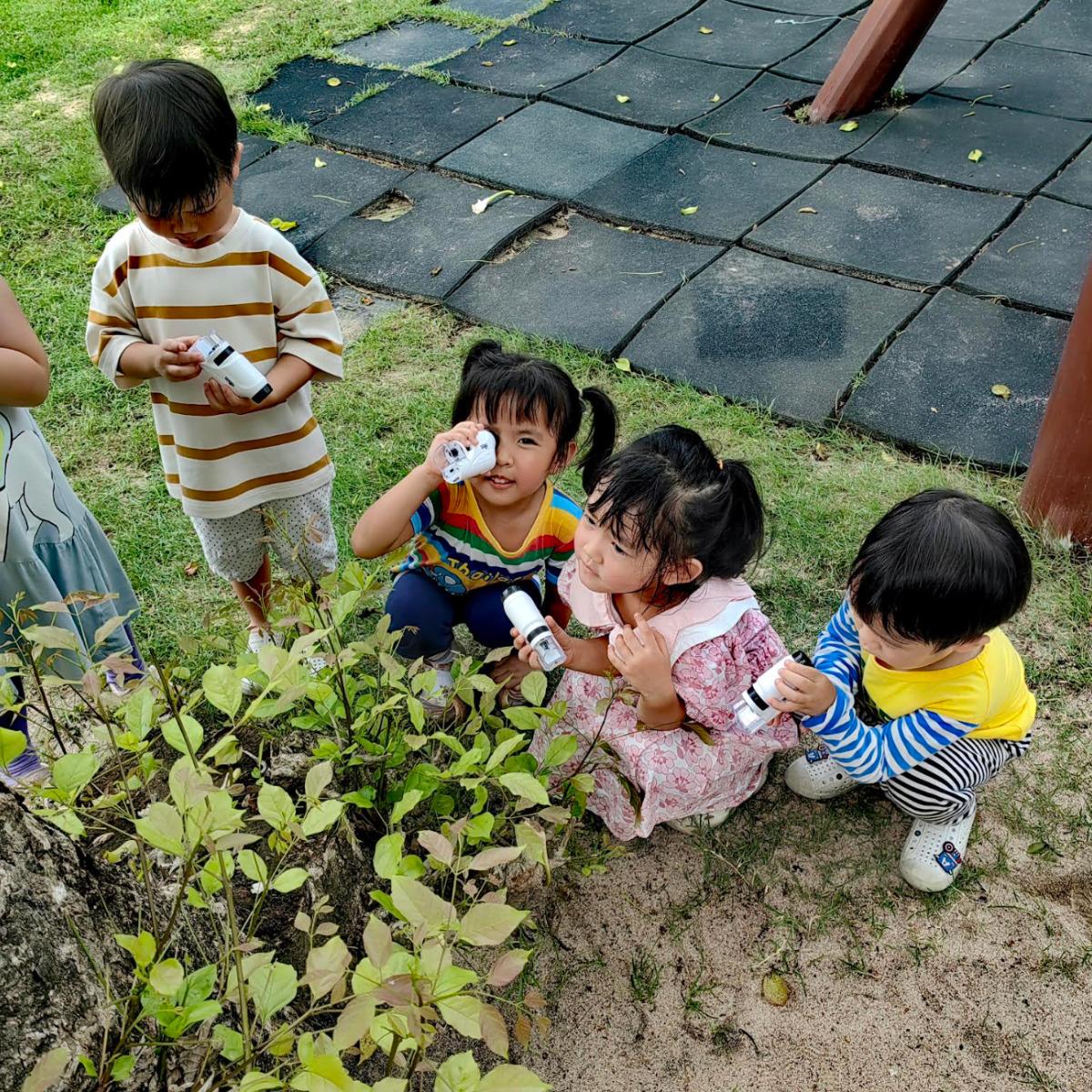
By Teacher Chantal As teachers, we often look for ways to make learning exciting, engaging and impactful for young children. One of the most powerful yet often overlooked classrooms is the great outdoors. Nature provides a hands-on environment where curiosity can flourish, creativity can thrive and students can learn in ways that connect with their senses and emotions. Why nature can be considered the ultimate classroom for young children: 1. Encourages Curiosity: Spending time in nature sparks curiosity in young children providing them with an opportunity to explore, ask questions about their surroundings and discover how the world works.  2. Hands-on Learning: Nature provides countless opportunities for hands-on learning. Through interaction with nature, children can use their senses to investigate the natural world by touching leaves, looking at insects or listening to sounds made by birds. 3. Promotes Physical Activity: Learning in nature involves physical movement such as running, climbing trees and walking which promotes motor skills and overall health in children. 4. Teaches Responsibility: Young children develop a sense of responsibility through taking care of the environment, plants and animals. Children can learn about ecosystems, conservation and the importance of protecting the planet. 5. Nurtures Creativity: The natural environment offers endless opportunities for hands-on exploration and unstructured play. Young children can use materials found in nature to construct and create objects encouraging creativity and problem solving skills. 6. Promotes Social Skills: Learning in nature fosters cooperative play. Children can work in groups and share resources which helps develop teamwork and communication skills. 7. Encourages Multidisciplinary Learning: Nature as a classroom can combine various subjects, including science, art, math, and language. Students can identify animals and plants outdoors as part of learning Science, observe patterns in nature during a Math activity and write or draw about their experiences by learning about art and language. It is important to keep in mind the power of outdoor learning. When we step outside, we give children the opportunity to thrive in the most beautiful classroom of all – the natural world.

Maths or Cooking? Why not both?!

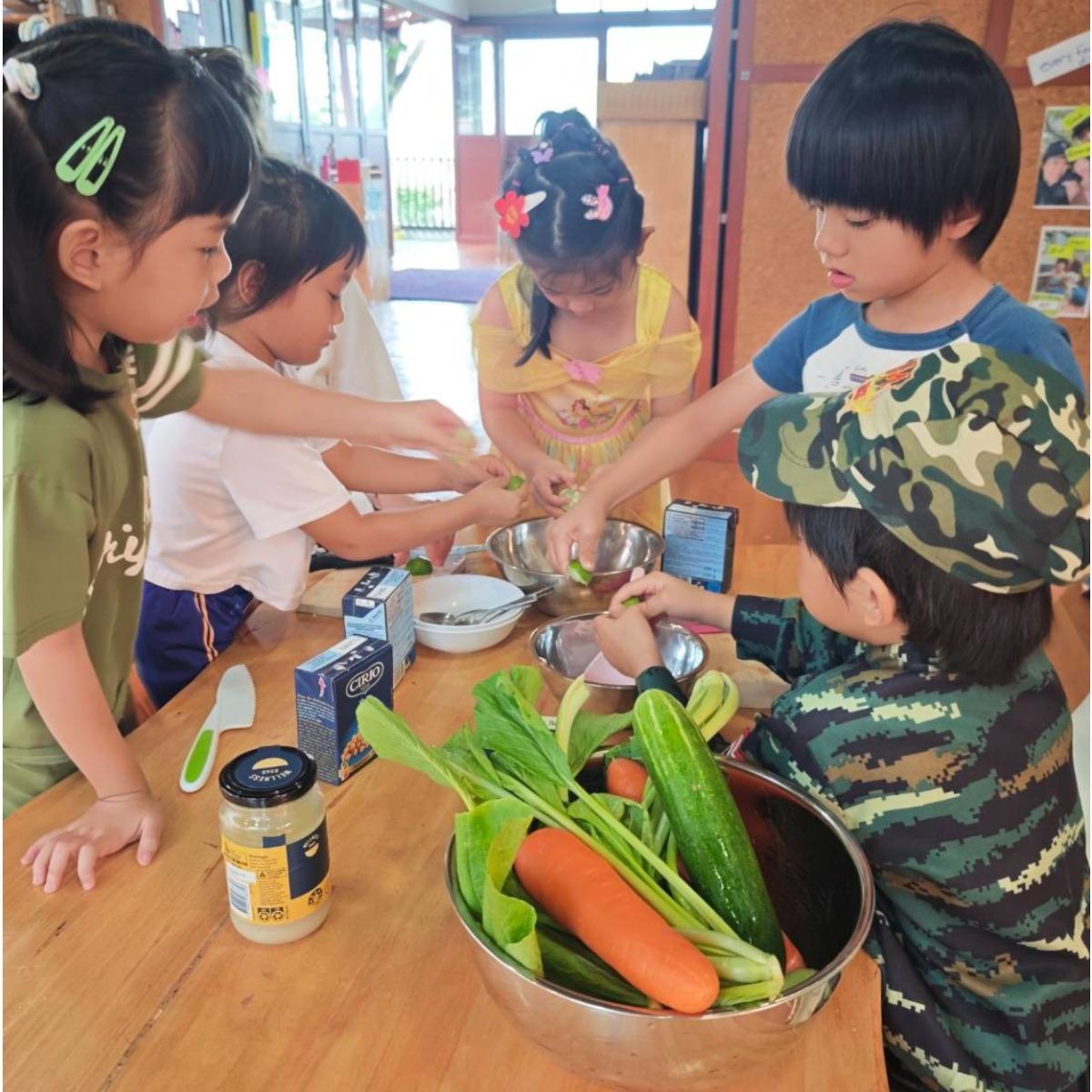
Before you continue reading, I would like for you to ask yourself this question, “What is my favorite method of learning?”  There are many categories of learning styles, and if we want the best for our children and students, some self reflection can open up a plethora of educational opportunities. For example, my favorite methods of learning are visual and hands-on. I need to feel the learning taking place and see the education before me. Which brings me to my next point, learning Maths in cooking!  The opportunities for connecting all five senses during cooking are endless. You and the children can get your hands in the mix, visually see the product being made, auditorily connect what you are doing, smell the education taking place, etc. When you begin with the recipe, the children are able to see the numbers on the page, even if the children are too young to understand fractions or comprehend numbers, exposure is the key focus. Children are investigative vacuums – what you say and do, they absorb. By simply pointing at the numbers on the page, you are helping your child snapshot that new information, even if their brains are not yet ready to fully comprehend. They are learning from your modeling that those numbers mean something, they are important.  When you are ready to begin your cooking and are gathering the ingredients, children are exposed to the names of products and what they belong to. For example, if you are cooking an egg omelette, the children will connect “egg” with the physical ingredient. Children will also learn that most foods must undergo the cooking process in order to be edible so the foods in their raw form are going to be completely different than the final product. If you need 3 eggs to make the omelette, model counting the eggs and then you just taught your child two things: eggs look different before they are cooked and counting to three.  If your child is older and can comprehend counting and numbers, then find a recipe including more complex measurements; such as ¾  teaspoon, ½ cup, etc. Explaining how these are parts of a whole and modeling how to accomplish that will bring a world of wonders to your curious child. Not only are the ingredients needing to be properly measured using maths facts, but the temperature that foods are cooked at is also a vital learning process in cooking. Children will learn that heat metamorphosizes foods and the higher the degree of temperature, the less time something will need to cook. Children will vicariously be introduced to keeping time and understanding that it is an important aspect while cooking.  By modeling cooking with your children, you are subjectively exposing them to counting, measuring, understanding number relations (number sense), telling/keeping time, all while spending time with them and practicing a skill that can be incredibly useful!  (The photograph is from K2-K3 when we made fake snow – might not exactly be cooking, but we had to follow a recipe and model how to pour 5 cups of baking soda, 1 cup of conditioner, and ⅓ cup of water!)

How Music Builds Early Math Skills: Recognizing Patterns in the Early Years

When we think of teaching math to young children, we often imagine counting blocks ornaming shapes. But what if one of the most powerful ways to introduce math doesn’tinvolve numbers at all? What if it begins with music? In the early years, children’s brains are wired for rhythm, repetition, and pattern — all which are also the foundation of mathematics. Through songs, clapping games, andsimple melodies, children begin to recognize and predict patterns, building essentialskills that support later success in math. Music is full of MathMusic and math may seem like two very different worlds, but they share a deepconnection. Both rely on patterns, sequencing, rhythm, and counting. When a childclaps along to a beat or repeats a line in a song, they are not just having fun — they’repracticing pattern recognition, a key early math concept. For example: Patterns: The Building Blocks of MathPattern recognition is one of the earliest math skills children develop. Before they canadd or subtract, children learn to identify patterns in the world around them — colors,shapes, sounds, and movements. Music provides the perfect opportunity to explorethese patterns in a fun and natural way. When children sing songs with repeated lines or rhythmic patterns, their brains areactively decoding sequences. Over time, this understanding of rhythm and repetitionlays the groundwork for:– Counting and number sense– Understanding sequences and order– Recognizing shapes and spatial relationships So when your child sways to the rhythm of a song, they’re not just enjoying the tune —they’re strengthening the same cognitive pathways they’ll later use for solving mathproblems. Easy Ways to Build Math Through Music at HomeYou don’t need to be a musician to bring math-rich music into your home! Try thesesimple activities:– Clap and Count: Sing your child’s favorite song and clap along together. Count howmany claps fit into each verse.– Move to the Beat: Dance to songs with different tempos. Ask questions like, “Is this songfaster or slower?” – Make a Pattern: Use simple sounds — clap, tap, stomp — to create a pattern (e.g., clap-tap-stomp, clap-tap-stomp). Let your child repeat it or make their own. – Sing Counting Songs: Classics like “Five Little Ducks” or “Ten in the Bed” help childrenconnect numbers with rhythm and sequence. In Tune with LearningWhen parents use music intentionally, they turn everyday moments into rich learningexperiences. Singing, moving, and listening together helps children feel the joy ofdiscovery — while building the pattern recognition skills that form the foundation ofmathematics. For more Information:https://www.naeyc.org/our-work/families/support-math-readiness-through-musichttps://education.umd.edu/importance-music-early-childhood https://www.themusicscientist.com/unlocking-early-math-skills-through-rhythm-a-developmental-approach/

Early Stages of Writing

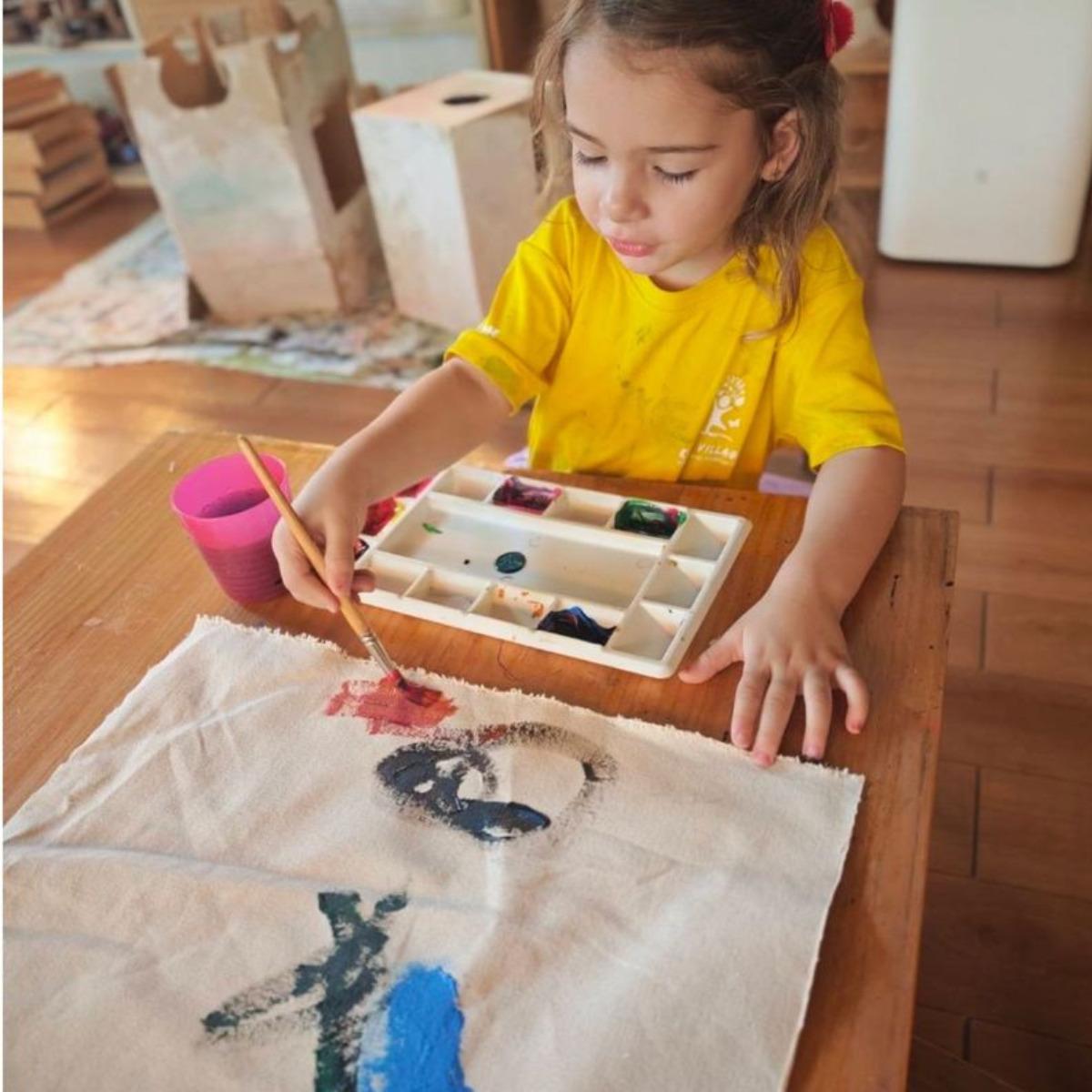
When we think about writing, we often picture children holding pencils, tracing letters, or copying theirnames. But the journey toward writing begins long before a child ever forms their first letter. Betweenages 1 and 3, children are developing the foundation for writing through fine motor skills, hand-eyecoordination, and the ability to control their fingers and wrists. These skills are essential for latesuccess with pencil and paper.The DevelopmentFrom around 12 to 18 months, toddlers begin exploring their environment by grasping, squeezing, andbanging objects. This helps strengthen the small muscles in their hands and fingers. Around 18 to 24months, you might see your child begin to “scribble” with crayons or markers. These scribbles maylook random, but they are an important step—your child is learning that movement can create marks!By age 3, many children start to hold crayons or markers with a fist grip or an early pincer grasp. Theyexperiment with circles, lines, and shapes. This is not about forming letters yet—it’s about control andconfidence. Every swirl or zigzag is practice for future writing. Practice Without Pen and PaperYou don’t need worksheets or pencils to encourage writing readiness. In fact, the best way to buildthese early skills is through playful, hands-on activities that strengthen the same muscles needed forwriting. Here are a few ideas: Encouragement MattersRemember, early writing isn’t about neatness or perfection—it’s about exploration and fun. Praiseeffort, not results, and let your child experiment freely. Over time, these activities will naturallytransition into more structured drawing and writing skills.

Developing Your Child’s Confidence

By Nancy SivilaiOctober 2025 Have you ever wondered how to help your child be more confident, positive, andhave a good feeling about themselves and others? Children need to know they arelovable, important, capable and valuable. Building your child’s confidence happensin the early stages of growth from people around them. Parents are a veryimportant influence, then as they go into the larger world, teachers, and peers.Confidence in a child can be compared to a balloon and with just one word ofcriticism it will collapse. I have included below ways to help build upon your child’sconfidence that are helpful in developing your child’s confidence.

Fostering Independence: Why It Matters In Early Childhood?

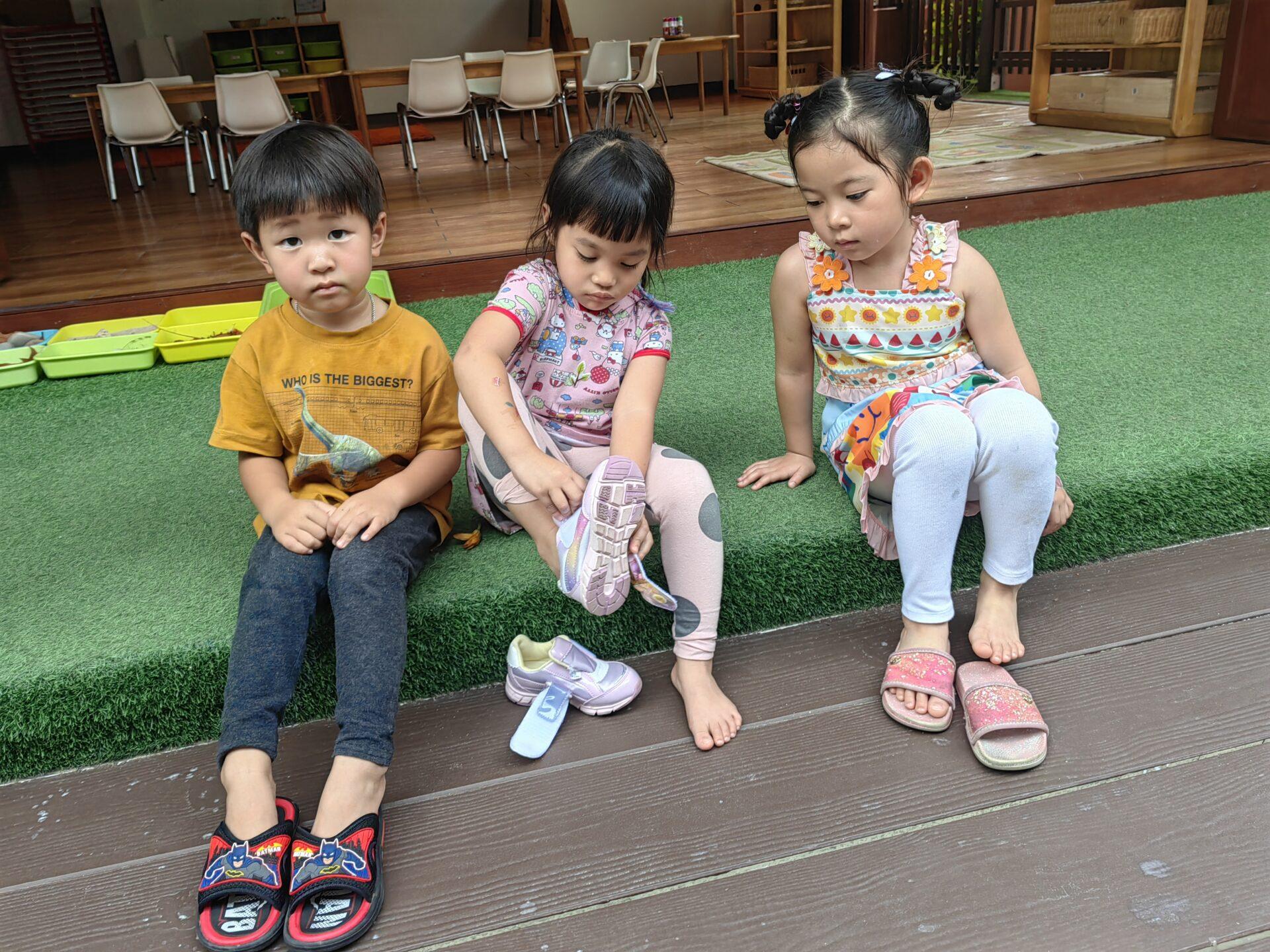
By Teacher ChantalOne of the most powerful gifts we can offer young children is the opportunity tobecome independent learners and thinkers. In early childhood education, fosteringindependence is not simply about teaching children to do things on their own, it isabout laying the foundation for lifelong skills such as confidence, decision-making,resilience and self-regulation.Independence in early childhood is built through routine tasks such as tyingshoelaces, pouring water, making choices or problem solving with other children.What may seem like small tasks are in fact powerful learning experiences for youngchildren. When children are given the chance to try, make mistakes and try again,they begin to understand their own capabilities. Through this, children gain self-confidence and a natural curiosity that supports lifelong learning.Children who are provided with the opportunity to make choices and takeresponsibility for their actions learn accountability and decision-making from a youngage. This independence fosters a sense of ownership over their learning andbehavior, making them more engaged and responsible students in the classroomand beyond.Encouraging independence also supports emotional development. When childrennavigate challenges on their own, they develop resilience and adaptability which aretraits that are essential in our ever-changing world.As teachers, our role is to create environments that empower children to takeinitiative while offering the right balance of support and challenge. This includesproviding clear routines, accessible materials and opportunities for choice. It alsomeans stepping back when appropriate, allowing children to solve problemsindependently before offering assistance.Fostering independence isn’t about children growing up too quickly. It is aboutmeeting them where they are and providing them with opportunities to discover whatthey can do. When we provide space for children to try, make mistakes and tryagain, we help them see their own strengths which builds confidence, nurturesimportant life skills, and prepares them not only for school, but for life beyond it.

Understanding Confidence and Self-Help in Early Childhood

Confidence and self-help skills are two of the most important thingschildren develop during their kindergarten years. At this age, children arelearning not only letters and numbers but also how to take care of themselvesand feel proud of their abilities. Confidence grows when children feel safe,supported, and encouraged. A confident child is willing to try new things, speakup in class and keep going even when something is difficult. Parents andteachers can help by giving positive praise, celebrating small successes andshowing patience when mistakes happen. For example, if your child tries to zipup their jacket and struggles, instead of jumping in right away, you might say,“You’re doing a great job trying. Let’s see if you can get it.” This gives themthe courage to keep practicing.Self-help skills are the everyday tasks that make children more independent.These include getting dressed, washing hands, putting away toys and managingtheir school supplies. These tasks may seem small to adults but to children, theyare big steps toward independence. When children learn to do things bythemselves, they feel proud and capable.Confidence and self-help go hand in hand. Each time a child successfullycompletes a task—whether tying shoelaces or carrying their school bag—theygain confidence. The more confident they feel, the more willing they are to trynew challenges. This cycle builds independence and a strong sense of self-worth.Parents can support this growth at home by allowing children to practice dailyroutines, offering encouragement and showing patience. Progress takes time, bygiving children opportunities to try, we help them believe in themselves andbecome more independent learners.

Creating an Environment That Supports Independence

Kindergarten is an exciting stage where children begin to explore the world moreindependently. As parents and teachers, one of the greatest gifts we can give them is anenvironment that encourages them to do things for themselves, make choices, and feelconfident in their abilities. Independence isn’t just about “doing it alone” — it’s aboutbuilding skills, responsibility and self-belief that will last a lifetime. It’s also important to let children try and learn from mistakes. If their tower of blocks fallsover or they spill water while pouring, it’s part of the learning process. Resist the urge toimmediately “fix” things — instead, offer gentle encouragement: “That didn’t work out, whatcould we try next?” This builds problem-solving skills and resilience. At the heart of supporting independence is trust. When we show children that we believe theycan try, even if it’s tricky, they start to believe it too. Whether it’s zipping a jacket, sharingtheir ideas, or solving a puzzle, every success — big or small — boosts their confidence. By creating a supportive environment, both at school and at home, we can help ourkindergarten children grow into confident, capable, and independent learners who are readyfor every new challenge ahead.

How do you spot if your child is feeling anxious?

Anxiety can affect people of all ages but it can be particularly difficult to recognise in children as it unlikely that they will have the vocabulary to explain their feelings. Some children may be aware that they feel “different” and try to hide their feelings or emotions, exasperating the problem. Of course, feeling anxious or worried from time to time is normal, but it needs to be addressed if it lasts for a sustained period. As the top kindergarten in Bangkok, we always monitor children’s behaviour to spot if they feel anxious. The early it is recognised, the earlier it can be treated. In many cases, this will be some reassurance and putting some perspective back on an issue. However, if anxiety starts becoming noticeable in behaviour and it affects their everyday thought process, which, in turn, will impact the home, social and school life, professional help may be required. What are the symptoms of anxiety in children? As a parent, you are the one who is perfectly positioned to monitor changes in your child’s behaviour. However, it is equally common for parents to dismiss their concerns, believing that they are overprotective. Children are likely to feel embarrassed by their feelings, so they will try to hide them where possible. Common behavioural changes that parents and teachers should look out for include: Problems with concentration – it is a concern when there appears to be no reason for poor concentration, such as outside distractions Poor sleeping patterns – we can all suffer from mild cases of insomnia on occasions, but if your child is struggling to get to sleep or is frequently waking up during the night, it is generally a sign that something is troubling them. Often disturbed nights are accompanied by nightmares which may help explain the root cause of the anxiety Changes in appetite – anyone who is struggling with anxiety may experience changes in their appetite. It can be both a loss of appetite or increased eating potentially of junk food as a source of comfort Heightened sense of worry or experience negative thoughts – constantly worrying or continually being negative about themselves or situations is always something that should start alarm bells ringing. While some people naturally worry or are less optimistic than others, it not normal for it to be excessive Increased bouts of anger or irritability – children who are experiencing stress or anxiety are likely to be shorter tempered and more irritable than usual. Some of the outbursts may appear to be out of control and out of character. It can often be closely linked to tiredness but is a sign that should not be overlooked Visible signs of tenseness or excessive fidgeting – being tense or fidgeting a lot is a common sign of anxiety. Sometimes people may be unaware what they doing, while other signs, such as visiting the toilet on numerous occasions, can be a coping mechanism Constant crying – if your child has started crying without apparent reason, it can often be a sign of anxiety Becoming clingy – younger children, in particular, can worry if they are too far from their parents, but unusual clinginess is a sign that they a worried about something and are looking to you for protection or reassurance Complaining of feeling unwell –when children claim to be feeling unwell but are presenting no signs of illness, it frequently a sign of anxiety. They may be complaining of “tummy aches”, which could be “butterflies”, a common symptom of nerves Younger children tend to feel separation anxiety, whereas older and children, especially teenagers, tend to be more worried about their peers, how they are perceived, or their schooling, known as social anxiety. What are the common causes of anxiety in children? When discussing anxiety, things must be kept in perspective as some children are better at coping than others; likewise, some children are naturally more anxious than others. Children are also very perceptive and can detect when others are anxious and replicate their actions or emotions. However, common causes of anxiety include: Moving house or changing school, especially if this happens frequently Tension in the home, such as parents fighting or arguing A bereavement to a close family member, friend or pet Being involved in an accident or becoming seriously ill, particularly if it requires hospitalisation Problems in or out of school such as bullying or underperforming compared to their peers If they are abused or neglected at home or elsewhere Children with autism spectrum disorders or attention deficit hyperactivity disorder (ADHD) are also more prone to experience anxiety problems. What can you do to help if your child is anxious? If you believe that your child is experiencing problems with anxiety, the first things you should always do is talk to them openly. You mustn’t pass judgement or dismiss their concerns. Regardless of how “silly” you may feel their problems are, they don’t feel the same way. For younger children, receiving reassurance and offering an explanation that they understand, such as why they don’t need to worry, will usually mean that the anxieties go away of their own accord. However, we would suggest that you seek professional advice: If your child isn’t getting better, or indeed, getting worse Self-help techniques aren’t working If the anxiety is affecting other aspects of their life such as family or school life What are the professional treatments for anxiety? There are various forms of professional treatment for anxiety, and which one is most appropriate will probably be determined by the severity of the anxiety and the individual. The most commonly used are: Counselling – a professional counsellor can help your child to understand their anxiety and develop coping strategies and work through the problem Cognitive Behavioural Therapy (CBT) – CBT is a more in-depth form of talking therapy and, similar to counselling, is focused on managing anxiety and altering thought patterns Medication – medication tends to be used as a last resort with children and only used when other avenues have been exhausted and even then is only usually prescribed by a

Why is “play” so important in a child’s development?

The concept of learning through play has long been widely recognised for its role in a child’s development. It helps build self-confidence and understand what they can achieve and the environment around them. As it is a “fun” activity, their attention span will be far longer, and as such, they frequently become incredibly absorbed in the activity. Play is essential in early year’s development, but it also provides the foundations for their future learning. As the leading international kindergarten in Bangkok, we believe that play should form an integral part of a child’s learning. Indeed, it forms a significant portion of our daily activities. We introduce different forms of play into our daily routines to ensure that the child develops a full complement of skills. Play is incredibly powerful and helps build the child’s language skills, social skills and creativity as well as making them more emotionally aware. Why do children enjoy play? Children enjoy play because it’s fun! They can explore their imagination and go on adventures and their own voyage of discovery. Through play, they will learn some of life’s essential skills such as problem-solving, working with and understanding others, the concept of sharing and empathy, as well as so much more. As children enjoy play, they find it easier to focus and be less affected by distractions which, in turn, aids the learning process. What playthings can be used to help children learn? There are a wide range of everyday items and objects that can be used to assist with learning. Some of the most frequently used in a classroom environment include: Water and sand – Children will quickly understand that water is not a solid, and both water and sand can be poured into different sized containers in a measuring exercise. It introduces some basic maths and science into their early learning. Pencils, paints and clay – These are all readily available items and can be used to encourage creativity. The child will use their imagination to “create” things, which, with the right encouragement, will boost their confidence. Dressing up, dolls, and soft toys – Dressing up will again encourage children to use their imagination, especially if they dress up with others, can turn the play into role-playing. Dolls and soft toys can be used to promote expressions of feelings. Building blocks and jigsaws – These can help gain a sense of order and put things in the right place. It enhances several aspects of cognitive behaviour and helps to build the idea of using logic. Sporting activities – Any sporting activities that involve the use of balls, dancing, running or climbing will help to improve coordination, core strength and flexibility, all of which are essential in terms of physical development. Sporting activities also encourage teamwork and the idea of sharing. Music – Music in every form, such as listening to music, playing music or singing, all help children to develop their listening skills and a sense of rhythm. Teachers and parents should avoid becoming too pushy when it comes to play. It must remain fun, and while gentle encouragement is fine, it can become counter-productive if a child feels pressured. Remember, children, learn by copying others and learning for themselves. All of the senses need to be explored, so it is normal for painting to be done without a brush! Show children pictures, read books and encourage them to understand words. As they get older, be prepared to answer lots of “why’s”, but you must recognise that this is an integral part of the learning process. It’s important to “set the scene” Younger children can become bored very quickly if they have to wait for things to be set up or activities aren’t ready. As parents or teachers, it is important to set the scene early. It might be as straightforward as making time and space where on other occasions you may need to put resources in play such as sand, building blocks or other games. If dressing up is to be involved, you should set the ball rolling with an idea and then let the child take that initial idea where they want using their imagination. However, making time for unstructured and spontaneous play is also essential, but you should expect to become involved to keep the play flowing. Play allows children to burn excess energy, which can help with behaviour whilst also encouraging them to use their imagination which develops motor skills and self-expression. The role of role-play! Role-play is sometimes referred to as dramatic play and is beneficial in a range of different way. It helps develop social skills and emotional awareness but can also help with their physical development. Acting can indirectly form a vital role in a child’s development as it can be a form of copying or pretending to be something else. It helps children understanding things from a different perspective, and they can “test” reactions and situations. Imagination is something that all children are born with, and it should always be encouraged and nurtured. If you think about your own child, how often do they pretend to talk to someone on the phone or drive a car? The use of the imagination has a close association with intellectual intelligence. Exploring All young children should be encouraged to explore, and in the main, this should be outdoors. They will experience new things, changing environments and different situations on a daily basis. They will use all their senses, known as multi-sensory learning, which helps develop gross motor skills. Exploring may incorporate role-play, creative play and messy play, but whichever form it comes in, it is an essential element of the learning cycle. Did you find our article interesting? We hope you found this article interesting and that it helped explain why play is so crucial in a child’s formative years. Play forms a vital part of our daily routine, but if you would like and help or advice about play, we are always on hand to help and answer any question that they may have. For