
By Nancy Sivilai February 2026
Why Sensory Play is Important
Children from infancy respond, learn and develop through sensory experiences involving their 5 senses which are sight, hearing, taste, smell, and touch. As they learn to use their senses with precision, they become more aware of their environment and become smarter. Studies prove that sensory activities are vital for your child’s neural brain connections and develop their language, social, physical and cognitive skills.
As educators of young children, we have learned that sensory play is not only an engaging way to learn but a needful part for their growth and development. At Kidz Village International School it is one of the major pathways in our teaching methods for our young learners.
What is Sensory Play?
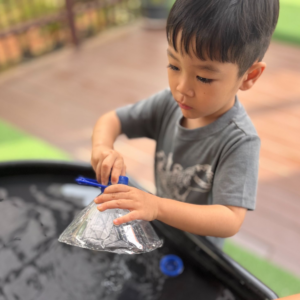
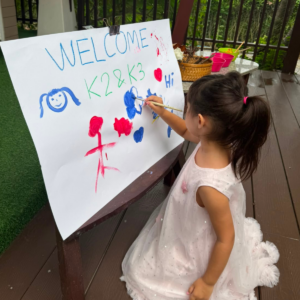
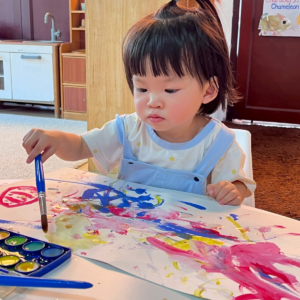
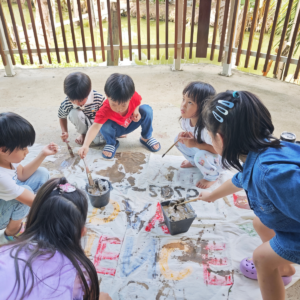
Sensory play is play in an activity that includes hand-on exploration like pouring and scooping sand and water, building with wet sand or finger painting. Sensory play involves learning with our five senses.
Sensory Play and 5 Senses
Sense (1 & 2) Smell and Taste
Smell and taste are separate senses but are closely related. One will greatly influence the other. A child may dislike a food because of its smell and not actually because of its taste. To know how a lemon tastes, the child would have to taste or smell the lemon.
- Smell/Taste ideas to try:
Some fun activities to do may include— making different colors of Gelatin and then name them by sense of smell or taste. Cook and talk about the different taste/smell which one you like and don’t like. Once your child can identify ingredients by taste/ smell, they can then use descriptive words. “It smells sweet”, or “It tastes salty.
Sense (3) of Touch
Touch is not only important for children to identify things by the way they feel, but they are developing language skills and increasing their descriptive word vocabulary as they explain how things feel when touched.
- Sensory Touch idea to try:
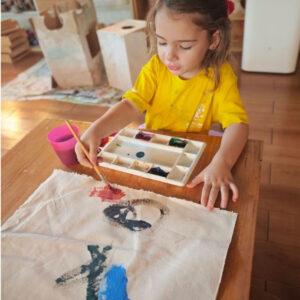
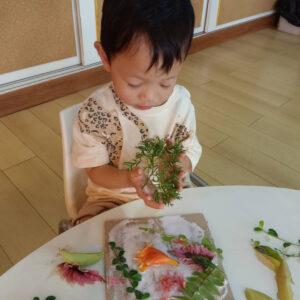
Some ideas to encourage sensory play through the sense of touch is by providing activities such as playdough, sand/water tables, shaving cream painting or bins with rice for scooping. Make a feely box with various textures and have your child put his hand and describe what he feels. Play with soapy water and place some toy animals to wash or do fingerpainting.
4. Sense of Hearing
When we teach children to listen we teach them auditory discrimination. Your child acquires his first language with human sounds then moves to the world in his environment.
- Sensory Hearing ideas to try
Have simple conversations regardless of the age of your baby or child, read stories, sing nursery songs, talk about sounds to the environment, identify the sounds animals make, go on a sound walk outdoors, play musical instruments, and talk about the city sounds found in transportation vehicles.
5. Sense of Sight
Children love learning about colors and sights. They are learning about shapes, movement, light and colors. Through their sense of sight they get to recognize people and develop reading and writing skills.
- Sensory Sight ideas to try:
Sensory sight activities include exploration play at the light table with various media such as with magnetic tiles, translucent colored gems or activities such as making patterns , color mixing, or color sorting.
To conclude:
How your child develops through Sensory Play is important not just in stimulating his senses but in building a strong foundation in all aspects of his development–social-emotional, language, cognitive math, music, science and physical development. Next time you notice your child at play remember it is more than just play. Enjoy watching your child enjoying sensory play.